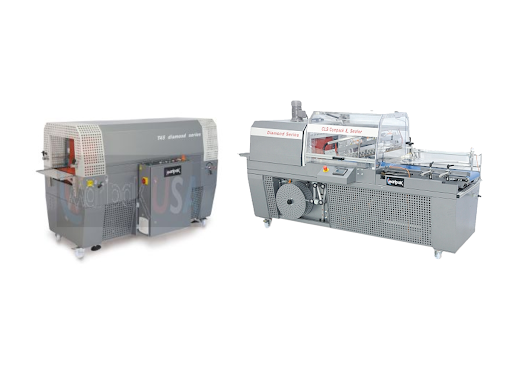
A well-finished shrink package starts before the product ever enters a heat tunnel. The film must first be positioned correctly, sealed securely, and cut cleanly around the product. If that initial seal is weak or uneven, the final package may develop open seams, excess film, wrinkles, or inconsistent shrink.
For packaging operations, a shrink wrapping sealer plays a central role in creating repeatable packages. Its performance depends on film selection, sealing temperature, product dimensions, operator setup, conveyor timing, and maintenance. Understanding these factors can help businesses improve package quality while reducing unnecessary rework and wasted material.
Why Is the Seal So Important?
Shrink film needs a closed perimeter before heat can tighten it around a product.
If a seal separates inside the tunnel, the film may pull away instead of shrinking uniformly. This can leave the product partially exposed or create an unattractive finished package.
A properly configured shrink wrapping sealer creates a strong seam without overheating or weakening the surrounding film.
The objective is not simply to use the highest possible temperature. The correct setting should produce a reliable seal while keeping the film intact and minimizing unnecessary material distortion.
Match the Sealer to the Product Size
Product dimensions are one of the first considerations when choosing sealing equipment.
The sealing area needs enough width and length to accommodate the largest product expected on the line. Height also matters because film must travel around the entire item without excessive tension.
When comparing a shrink wrapping sealer, packaging teams should measure:
- Product length
- Product width
- Product height
- Film width
- Maximum package orientation
- Expected product variation
It is useful to consider future products as well. Equipment selected for only one current package size may become restrictive if the product range expands.
Film Type Changes Sealing Requirements
Not all shrink films respond to heat in the same way.
Polyolefin, polyethylene, and other materials can require different sealing temperatures and dwell times. Film gauge can also influence how much heat is needed to form a strong seam.
A shrink wrapping sealer should therefore be adjusted according to the specific film being used.
If the temperature is too low, the seal may separate. If it is too high, the film may burn, become brittle, or create an excessively thick seam.
Operators should test each film specification rather than assuming that settings from one material will work equally well with another.
L-Sealers Are Useful for Individual Products
L-sealers create two sealing edges at the same time, forming an L-shaped seal around the product.
They are commonly used with center-folded shrink film. A product is inserted between the two film layers, and the sealing frame closes around the remaining open sides.
This configuration can work well for boxes, books, trays, printed products, retail items, and other individually wrapped goods.
Depending on production requirements, an L-style shrink wrapping sealer may operate manually, semi-automatically, or as part of a more automated packaging line.
The appropriate level of automation depends largely on throughput and labor requirements.
Sealing Temperature Needs Careful Adjustment
Temperature is one of the most important setup variables.
A good seal should be consistent across the full sealing bar. If one area is cooler than another, parts of the seam may remain weak.
Excessive heat can create film buildup or shorten the life of certain sealing components.
Operators working with a shrink wrapping sealer should make adjustments gradually and inspect finished seams carefully.
A successful seal typically appears uniform without excessive melting around the edge.
Recording proven settings for frequently used products and films can make changeovers much faster.
Product Positioning Affects Film Use
Where the product sits inside the film can influence both appearance and material efficiency.
Too much film around the item creates larger seams and excess material that must shrink during tunnel processing. Too little film may place unnecessary tension on the seal.
A well-set shrink wrapping sealer should leave enough film for secure sealing and shrinking without creating excessive waste.
Operators can improve consistency by using guides or repeatable positioning points.
This becomes especially valuable during long production runs because small differences in film usage can add up to substantial material consumption over thousands of packages.
Conveyor Timing Matters in Automated Lines
In automated or semi-automated environments, the sealer needs to work at a pace compatible with the rest of the packaging line.
If products arrive too quickly, they may accumulate before sealing. If the sealer operates faster than the tunnel or discharge conveyor, a bottleneck may develop downstream.
The shrink wrapping sealer should therefore be viewed as one stage in a connected system.
Line speed may depend on:
- Product infeed
- Sealing cycle time
- Film feed
- Tunnel dwell time
- Cooling
- Discharge capacity
Balancing these stages can improve actual throughput more effectively than simply increasing the speed of one machine.
Automatic Film Feeding Can Improve Consistency
Film handling becomes increasingly important as production volume rises.
Manual film positioning can work for lower-volume applications, but repetitive loading may introduce variations in film length and package placement.
More automated systems can help control film movement and product spacing with greater consistency.
For a shrink wrapping sealer, stable film feeding can contribute to repeatable seals, lower material waste, and smoother transitions between products.
The value of automation depends on production volume. A low-volume operation may not gain enough benefit to justify complex equipment, while a high-volume line may quickly recover the value through reduced handling.
Changeover Time Should Not Be Ignored
Maximum packages per minute only tells part of the productivity story.
A line handling many different product sizes may lose significant time during adjustments. Operators may need to change film, guides, sealing settings, product spacing, or conveyor speed between runs.
A shrink wrapping sealer with straightforward adjustment points can help reduce this downtime.
Businesses packaging many SKUs should therefore evaluate changeover procedures alongside operating speed.
A slightly slower machine that changes between products quickly may produce more total packages during a mixed-production shift than a faster system with complicated setup requirements.
Maintenance Has a Direct Effect on Seal Quality
Sealing components experience repeated heat and mechanical movement.
Over time, residues, wear, alignment changes, or damaged components can affect the consistency of the seam.
Routine maintenance for a shrink wrapping sealer may involve inspecting:
- Sealing elements
- Cutting components
- Film guides
- Conveyor surfaces
- Temperature controls
- Safety systems
- Moving mechanisms
Operators should also pay attention to sudden changes in seal appearance.
A problem that seems related to film quality may actually be caused by worn or contaminated machine components.
Operator Safety Is Essential
Shrink-packaging equipment combines heat, moving mechanisms, film cutters, and conveyors.
Safety systems should never be bypassed to increase production speed.
Operators need clear training on loading, adjustments, film changes, jam removal, and emergency procedures.
A shrink wrapping sealer should also be installed with sufficient workspace around it so operators can access controls and handle materials without awkward movement.
Preventive maintenance should only be performed according to proper lockout and safety procedures where applicable.
Production efficiency should always be balanced with safe equipment use.
Pair the Sealer Correctly With the Heat Tunnel
Sealing and shrinking need to be planned together.
A strong seal can still produce a poor-looking package if the heat tunnel is set incorrectly. Likewise, an excellent tunnel cannot compensate for film that was poorly sealed beforehand.
The complete shrink process typically includes:
- Product positioning
- Film wrapping
- Sealing and cutting
- Transfer to the tunnel
- Controlled shrinking
- Cooling
- Inspection
The shrink wrapping sealer and tunnel should be matched according to package dimensions, film type, and required throughput.
This creates more predictable results across the full line.
How Can Packaging Waste Be Reduced?
Film waste affects both material costs and production efficiency.
Using excessive film around each product increases consumption and may require more heat to achieve a tight package. Incorrect seals can also create rejected packages that must be rewrapped.
Careful film sizing, consistent product positioning, and documented machine settings can all reduce unnecessary usage.
A properly adjusted shrink wrapping sealer should produce enough film around the item to create a secure package without leaving large amounts of excess material.
Tracking waste by product can also help identify where setup improvements are needed.
Conclusion
A reliable shrink package depends heavily on the quality of its initial seal. A properly selected and configured shrink wrapping sealer can improve seam consistency, reduce film waste, support faster production, and make downstream heat shrinking more predictable. When evaluating equipment and configurations from suppliers such as Maripak USA, packaging teams should consider product dimensions, film specifications, automation requirements, changeover frequency, maintenance access, and compatibility with the heat tunnel. The best sealing system is not simply the fastest machine available. It is the one that produces repeatable seals across real production conditions while fitting smoothly into the wider packaging workflow.