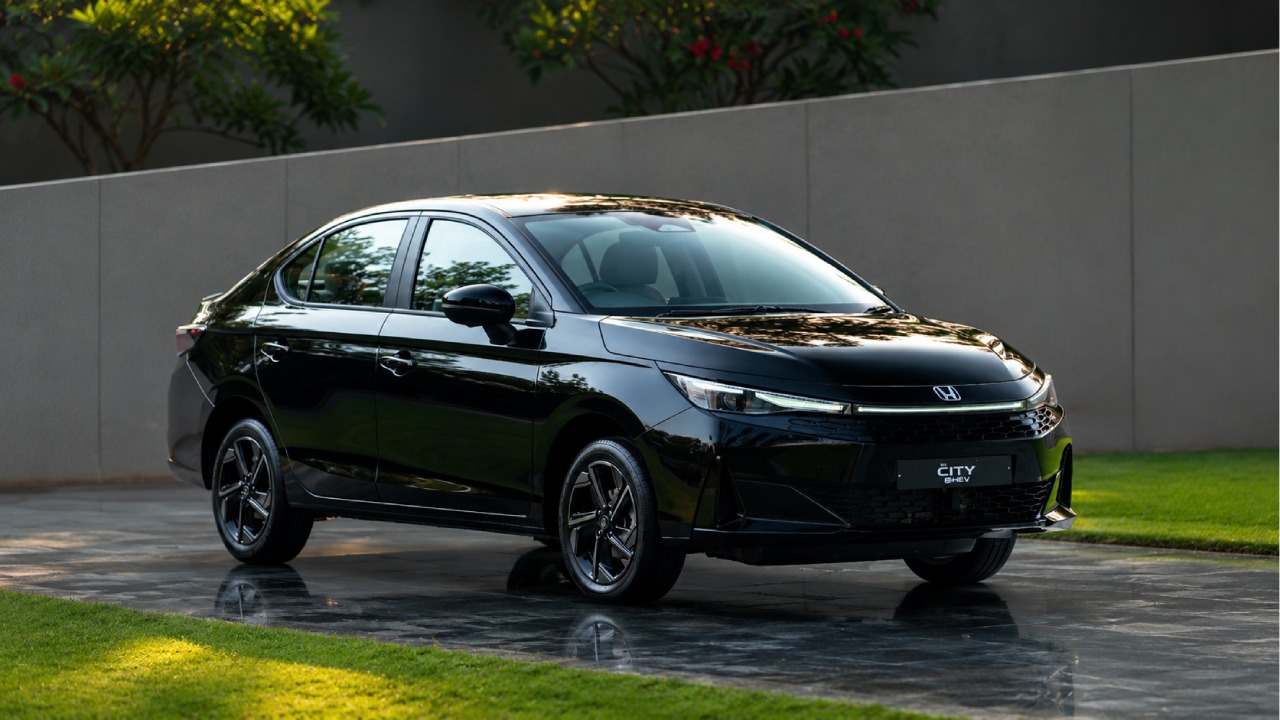
The Honda City is available with a conventional petrol engine and an e:HEV strong-hybrid system, making its mileage range unusually broad for a sedan. Certified figures favour the hybrid, while reported results show how route type and traffic determine whether its higher purchase price translates into meaningful fuel savings.
Honda City mileage by powertrain
The City petrol manual is rated at about 17.8 kmpl and the petrol CVT at roughly 18.4 kmpl, while the e:HEV strong hybrid carries an ARAI-certified figure near 27.13 kmpl. Reported mixed-use mileage commonly ranges from 12-17 kmpl for the petrol and about 20-25 kmpl for the hybrid. Traffic, speed, air-conditioning and driving style create the difference between certification and ownership.
| Parameter | Details |
| Petrol manual certified mileage | 17.8 kmpl |
| Petrol CVT certified mileage | 18.4 kmpl |
| e:HEV certified mileage | 27.13 kmpl |
| Reported petrol mixed mileage | Around 12-17 kmpl |
| Reported hybrid mixed mileage | Around 20-25 kmpl |
How the petrol City compares with rival sedans
Against turbo-petrol sedans, the honda city naturally aspirated engine prioritises smooth, linear response. Rival 1.0-litre turbo engines may feel stronger at low revs and can return competitive highway economy. The City counters with predictable power delivery and an efficient CVT option. Buyers should compare real city figures for the exact gearbox rather than assuming that a smaller turbo engine will always use less fuel.
The hybrid advantage in stop-start traffic
The e:HEV can use its electric motor extensively at urban speeds and recover energy during deceleration. This allows it to deliver its strongest advantage in congested routes where a normal petrol engine wastes fuel while idling and accelerating repeatedly. Smooth braking supports regeneration. On a clear highway, the petrol engine operates more frequently, so the percentage advantage over the standard City can narrow even though the hybrid remains efficient.
- Compare hybrid savings against the purchase premium.
- Use the same route assumptions for rival sedans.
- Test rear-seat and boot usability with family.
Is the hybrid premium recoverable
Fuel savings need to be compared with the additional purchase price. A buyer should estimate annual kilometres, city percentage and ownership duration. High-mileage urban users can recover more of the premium, while a low-use household may not. The hybrid also offers a different driving experience, quiet low-speed movement and additional technology. Value therefore includes refinement and convenience, not only a simple payback calculation.
City versus Slavia, Virtus and Verna
The Slavia and Virtus offer turbo-petrol choices with strong highway performance. The Hyundai Verna provides naturally aspirated and turbo options with extensive equipment. The City’s distinctive advantage is its strong-hybrid version and long-standing focus on cabin usability. A fair comparison should cover rear-seat comfort, boot space, safety, service access and gearbox behaviour alongside mileage. The most economical car is not automatically the best family sedan.
Which City makes sense for your driving
The petrol manual suits drivers who value control and lower initial cost. The CVT is appropriate for urban convenience and can remain efficient with gentle inputs. The e:HEV is the mileage leader for frequent city use and high annual running, provided the price premium fits the budget. Buyers should use conservative reported figures in their calculation and select the version that balances fuel savings with the ownership experience they actually want.
A fair final comparison method
Use the same annual kilometres, fuel price and city share for the City, Slavia, Virtus and Verna honda city mileage. Add the hybrid premium only where relevant and keep performance preferences separate from fuel cost. Then test the two finalists with regular passengers. This method gives mileage its proper weight without allowing it to dominate comfort, safety or the quality of the daily driving experience.
A Honda City payback example
A Honda City buyer travelling 20,000 km a year in dense traffic can use the e:HEV’s electric operation and regeneration frequently, making its premium easier to recover. A household covering 7,000 km may prefer the petrol CVT because its purchase price is lower and it still offers urban convenience. A highway-focused driver may compare the standard City with turbo-petrol rivals that deliver stronger mid-range performance. Applying 12-17 kmpl to petrol and 20-25 kmpl to the hybrid creates a conservative fuel budget. Rear-seat comfort, boot use and service access should then decide between the finalists. This method keeps the comparison grounded in ownership rather than turning mileage into the only measure of a family sedan.
Mileage should not erase the City’s other strengths
The e:HEV clearly leads the City range on certified and reported fuel economy, especially in urban use. The petrol manual and CVT remain easier to justify for lower annual distance because their purchase price is smaller. Buyers should calculate the hybrid payback, then compare rear-seat comfort, boot use, performance and service support with rival sedans. The result may still favour the hybrid even when full recovery takes time because quiet low-speed driving has value of its own. Mileage should guide the decision, but it should not replace a complete family test of the exact version.
A final test drive with regular passengers can confirm whether the chosen powertrain balances efficiency, comfort and performance.


