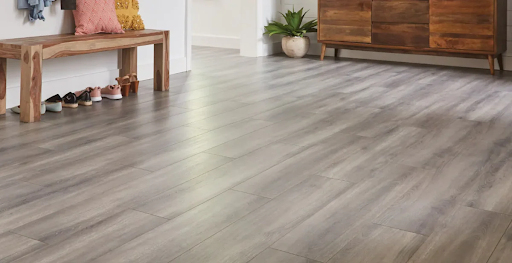
Choosing the right vinyl floor involves more than selecting a color or wood-look design. Homeowners must also decide how the flooring will be attached to the subfloor. Click-lock and glue-down systems can both perform well, but they suit different rooms, budgets, and installation conditions.
A floating floor, including many WPC click flooring options, connects at the plank edges rather than attaching directly to the subfloor. This method is popular in residential projects because installation can be relatively quick and the floor may feel more comfortable underfoot.
However, quick installation does not automatically make click-lock flooring the best choice. Room size, subfloor condition, moisture, furniture weight, and expected traffic should all influence the decision. Homeowners need to compare how each method will perform after years of use, not only how easy it is to install.
Understanding the Main Difference
Click-lock flooring forms one connected surface that floats over the subfloor. The planks expand and contract together, so installers must leave a small expansion space around walls and fixed objects.
By comparison, glue-down vinyl plank flooring attaches each plank directly to the prepared surface using an approved adhesive. This creates a firm floor with less vertical movement and can make individual plank replacement more manageable.
A flooring provider such as Sam’s Flooring can help homeowners compare both systems based on room conditions rather than assuming that one method works everywhere. The right choice often depends on how the space will be used and how much preparation the subfloor requires.
How Click-Lock Flooring Works
Click-lock planks have specially shaped edges that connect without nails or adhesive. Installers usually angle one plank into another and press it into position. Once connected, the planks create a continuous surface.
The floor sits over an underlayment or attached pad. This layer may improve comfort, control sound, and protect the locking system from slight surface irregularities.
Because the floor is not permanently attached, installation can move faster than a full-spread glue-down project. It also creates less adhesive-related mess.
However, the locking system carries much of the pressure created by foot traffic and furniture. If the subfloor is uneven, the planks may flex when people walk across them. Constant movement can weaken the joints and create gaps, clicking sounds, or damaged edges.
Advantages of Click-Lock Installation
Click-lock flooring can be a practical choice for bedrooms, living rooms, dining areas, and other residential spaces. It offers several useful advantages.
The first is installation speed. Once the subfloor has been prepared, installers can connect the planks without waiting for adhesive to become ready.
It can also be installed over some existing hard floors, provided the surface is flat, stable, and approved by the manufacturer. This may reduce demolition work.
Many click-lock products include an attached underlayment. This feature can make the floor feel warmer and quieter than a thin product installed directly over concrete.
Floating floors can also be removed more easily than fully glued floors. However, removal without damaging the locking edges is not always possible, especially after years of use.
Limitations of Click-Lock Flooring
Click-lock flooring needs room to move. Installers must leave the required expansion gap around walls, cabinets, pipes, door frames, and other fixed objects.
If the floor becomes trapped under heavy built-in cabinets or fixed islands, natural expansion may cause lifting or separation. Installation instructions should therefore be reviewed before the cabinets or flooring are placed.
Large rooms may also require transition strips or expansion breaks. Ignoring these requirements can place too much pressure on the locking system.
Heavy rolling loads are another concern. Office chairs, wheelchairs, appliances, and furniture with small wheels can place concentrated pressure on the joints. A protective mat or a different installation method may be needed.
Although many click-lock products resist water, moisture can still reach the subfloor through the room edges. Expansion gaps and perimeter areas must be handled correctly.
How Glue-Down Flooring Works
Glue-down flooring uses adhesive to secure the planks directly to the subfloor. The adhesive may be applied across the entire surface or used according to a product-specific method.
This installation creates a low-profile and stable floor. Since the planks do not float as one large unit, they generally do not need the same expansion space as click-lock products. Still, installers must follow the manufacturer’s requirements.
The adhesive needs the right amount of time before the planks are placed. Temperature, humidity, adhesive type, and subfloor porosity can affect this timing.
Pressure must also be applied after installation. A flooring roller is often used to create strong contact between the planks and adhesive.
Advantages of Glue-Down Installation
Glue-down flooring feels firm because there is little movement between the plank and subfloor. This can be useful in kitchens, offices, retail areas, rental properties, and other high-traffic spaces.
It can also work well in large open rooms. Since each plank is attached individually, the floor does not move as one large surface.
Individual repairs may be easier. If one plank becomes damaged, an installer can often soften or release the adhesive, remove the affected piece, and place a replacement in the same area.
Glue-down products usually have a thinner profile than click-lock planks. This can help when the new floor needs to meet another surface without creating a large height difference.
They may also handle rolling traffic better, although product specifications should always be checked before installation.
Limitations of Glue-Down Flooring
Subfloor preparation is especially important for glue-down vinyl. Every bump, crack, seam, or low area may affect the finished appearance.
Because the planks sit close to the surface, imperfections can sometimes become visible through the flooring. This issue is often called telegraphing.
The subfloor must also be clean. Dust, paint, grease, old adhesive, and construction debris can prevent proper bonding.
Moisture can affect both the flooring and adhesive. Concrete should be tested before installation, even when the vinyl itself is waterproof.
Glue-down installation also requires more skill. Incorrect adhesive selection, poor coverage, or badly timed placement can cause loose edges and shifting planks.
Removing an entire glued floor can take more time than removing a floating system. Old adhesive may need to be scraped or mechanically removed before a new floor is installed.
Which Method Is Better for Uneven Subfloors?
Neither installation method should be used to hide a seriously uneven subfloor. However, the two systems respond differently to minor imperfections.
Click-lock flooring may bridge small low areas, but this does not mean they can be ignored. If the plank bends under pressure, the locking edges may eventually break.
Glue-down flooring follows the shape of the subfloor more closely. Even small imperfections may become visible after installation.
In both cases, the subfloor should be inspected and corrected. High spots can be reduced, while low areas may be filled with an approved leveling compound.
Proper preparation may add time and cost to the project, but it protects the flooring and improves the final result.
Which Is Better for Basements?
Basements often have concrete subfloors and possible moisture concerns. Homeowners should test the concrete before choosing either installation method.
Click-lock WPC flooring can feel warmer over concrete, particularly when it includes an attached pad. It may also provide more comfort in a basement family room or bedroom.
Glue-down flooring creates a thinner and firmer surface. However, the adhesive must be suitable for concrete and the measured moisture level.
If the basement has active leaks, poor drainage, or visible dampness, new flooring should not be installed until the problem has been corrected. Waterproof planks cannot protect walls, furniture, or the building structure from ongoing water entry.
Which Is Better for Kitchens?
Both methods can work in a kitchen when the product is suitable and installed correctly.
Click-lock flooring provides a comfortable surface and can be installed quickly. However, it should not be trapped beneath fixed cabinets unless the manufacturer allows it.
Glue-down vinyl offers stability around islands, appliances, and busy walking areas. It may also make it easier to replace a damaged plank after an appliance leak or dropped object.
Homeowners should consider appliance movement as well. Heavy refrigerators and ranges can damage flooring if dragged across the surface. Protective boards and proper moving methods should be used regardless of installation type.
Which Method Costs Less?
Click-lock installation may have a higher material cost because the planks include a locking system and often have a thicker core. However, labor may be lower because no full-spread adhesive is required.
Glue-down materials may cost less per square foot, but the project can require adhesive, floor preparation, additional labor, and specialized tools.
The total cost should include:
- Flooring materials
- Subfloor repairs
- Underlayment or adhesive
- Moisture testing
- Trim and transition pieces
- Installation labor
- Removal of the existing floor
A fair comparison should consider the full project rather than the plank price alone.
Maintenance and Future Repairs
Both types are generally easy to clean. Regular sweeping removes grit, while damp cleaning manages everyday dirt and spills.
Click-lock floors may be more difficult to repair in the middle of a room. Reaching a damaged plank can require removing several rows from the nearest wall. Some installers use special repair methods, but the process may affect nearby locking edges.
Glue-down planks can often be replaced individually. However, the replacement piece must match the original flooring, and old adhesive must be removed carefully.
Homeowners should keep several extra planks after installation. Product colors can vary between manufacturing batches, and the original design may not remain available.
How to Make the Right Choice
Click-lock flooring may be more practical when homeowners want quick installation, additional comfort, and a floating system for a residential room.
Glue-down flooring may be better when the space experiences heavy traffic, rolling movement, or requires a low-profile and stable surface.
The condition of the subfloor may ultimately influence the decision. A professional inspection can identify moisture, levelness, cracks, and other problems before materials are ordered.
Homeowners should also review the manufacturer’s installation instructions and warranty. Using an unapproved method or underlayment could limit warranty coverage.
Final Thoughts
Click-lock and glue-down vinyl can both provide durable and attractive results. The better method depends on the room, traffic level, subfloor, installation budget, and future repair needs.
Click-lock flooring offers speed, comfort, and a cleaner installation process. Glue-down flooring provides stability, a thinner profile, and easier individual plank replacement in many cases.
Instead of choosing based only on price or convenience, homeowners should consider how the floor will perform in everyday life. Careful subfloor preparation and correct installation will have as much effect on the final result as the flooring material itself.


