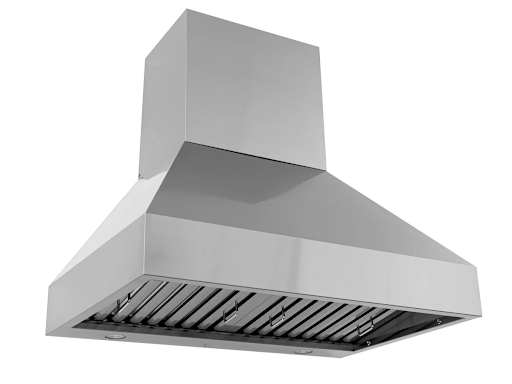
A large cooking surface can generate substantial heat, steam, grease, smoke, and odors, especially when several burners are used at once. In these situations, a 60 kitchen hood can provide the coverage needed to capture airborne cooking contaminants before they spread through the room. However, width alone does not determine ventilation quality. Airflow, hood depth, duct sizing, mounting height, filter design, noise, and makeup air requirements all affect performance. Homeowners planning a large kitchen should therefore treat the hood as part of the overall ventilation system rather than simply as a decorative appliance.
When Is a 60 Kitchen Hood the Right Choice?
A 60 kitchen hood is typically considered for wide cooktops, professional-style ranges, or cooking areas that benefit from extra capture width.
The hood should generally cover the cooking surface adequately, and in some configurations it can be helpful for it to extend beyond the width of the range. This additional coverage can improve capture because smoke and steam may spread outward as they rise.
Before choosing a hood this large, consider:
- Range or cooktop width
- Burner output
- Wall or island installation
- Hood mounting height
- Ceiling height
- Cabinet dimensions
- Available duct route
- Cooking frequency and intensity
A 60-inch model may be unnecessarily large for a compact cooktop, but it can be well suited to oversized or high-output cooking equipment.
How Much Airflow Does a Large Hood Need?
Airflow is measured in cubic feet per minute, commonly abbreviated as CFM.
A 60 kitchen hood used over a powerful gas range may require more airflow than a hood installed above a lower-output electric cooktop. Frequent frying, grilling, wok cooking, and searing can also increase ventilation needs.
Higher CFM can improve smoke and heat removal, but simply selecting the strongest blower available is not always the best approach.
Very high airflow may:
- Increase noise
- Require larger ductwork
- Increase energy use
- Create negative indoor pressure
- Trigger makeup air requirements
The correct airflow should be based on the cooking appliance, duct system, and local building requirements.
Why Hood Depth Matters as Much as Width
Many buyers focus on width and overlook depth.
A wide but shallow hood may fail to capture smoke effectively from front burners, particularly on deeper professional-style ranges.
The depth of a 60 kitchen hood should provide enough coverage over the cooking surface without interfering with headroom or normal cooking access.
Deeper hoods can improve capture by creating a larger area where rising contaminants can collect before being exhausted.
This is especially important in kitchens where high-output burners are located near the front edge of the range.
Wall-Mount vs. Island Installation
Mounting location changes how a range hood interacts with surrounding air.
Wall-mounted hoods benefit from the wall behind the cooking surface, which can help guide rising air into the hood.
Island hoods are exposed on all sides. Air movement from HVAC vents, ceiling fans, doors, and people walking nearby can push smoke and steam away from the capture area.
As a result, island installations often require careful consideration of hood size and airflow.
A 60 kitchen hood should always be selected according to its intended mounting configuration rather than assuming that any large hood can work equally well on a wall or over an island.
Why Duct Size Can Affect Performance
The ventilation system is only as effective as its ductwork allows it to be.
Undersized ducts create resistance, which can reduce airflow and increase noise. Long duct runs and multiple elbows can also restrict performance.
A 60 kitchen hood should generally be connected to ductwork that matches the manufacturer’s specifications.
For better efficiency:
- Use smooth metal ducting where possible
- Keep the run as short as practical
- Minimize sharp bends
- Avoid reducing duct diameter unnecessarily
- Use an appropriately sized exterior vent cap
Poor duct design can make a high-powered blower perform like a much weaker system.
What Type of Filters Should You Look For?
Grease filters help prevent airborne grease from entering the blower and duct system.
Baffle filters are common in larger hoods because they can handle high levels of grease exposure and are often washable.
Mesh filters are another option but may require more frequent cleaning depending on cooking habits.
Regular filter maintenance is essential for any 60 kitchen hood. Grease buildup can restrict airflow, increase odors, and create avoidable fire risk.
Homes where heavy frying or grilling is common may need to clean filters more frequently than homes where most cooking involves boiling or light sautéing.
How High Should the Hood Be Mounted?
Mounting height has a direct effect on capture efficiency.
A hood installed too high may allow smoke to spread before reaching the ventilation area. A hood installed too low can interfere with cooking and may be exposed to excessive heat.
Manufacturers normally specify an acceptable installation range above the cooking surface.
For a 60 kitchen hood, installers should follow the recommended clearance rather than relying on a universal measurement.
Ceiling height also matters because taller rooms may require chimney extensions, customized duct covers, or different installation planning.
What Is Makeup Air and Why Does It Matter?
Powerful kitchen exhaust systems remove a significant amount of indoor air.
That air has to be replaced somehow.
In modern tightly sealed homes, a large hood can create negative indoor pressure if replacement air cannot enter quickly enough. This can affect comfort and, in certain circumstances, interfere with combustion appliances.
Some building codes require dedicated makeup air when kitchen exhaust exceeds a specified airflow threshold.
Anyone installing a high-CFM 60 kitchen hood should therefore verify local requirements before completing the ventilation design.
An HVAC professional can help determine whether dedicated replacement air is needed.
Can a Large Range Hood Be Quiet?
A larger hood does not necessarily have to be excessively noisy.
Noise depends on fan design, duct resistance, airflow level, motor location, and installation quality.
One useful approach is to choose enough capacity that normal cooking can be handled at a lower fan speed. Maximum airflow can then be reserved for periods of intense cooking.
A straight and correctly sized duct run can also reduce turbulence.
Keeping the filters clean and ensuring that the blower does not have to force air through unnecessary restrictions can help a 60 kitchen hood operate more quietly.
Which Features Are Worth Paying For?
Modern range hoods may offer many additional features.
Common examples include:
- Multiple fan speeds
- LED task lighting
- Dishwasher-safe baffle filters
- Delay-off timers
- Remote controls
- Variable-speed operation
- Automatic heat sensing
- Chimney extensions
Not every feature is essential.
The most important priorities remain adequate capture area, suitable airflow, proper duct design, compatible installation height, and reliable filtration.
Convenience features should be considered after those core requirements have been satisfied.
How Can You Balance Cost and Performance?
Large hoods can vary significantly in price, but a lower upfront price does not necessarily mean better value.
A cheaper unit may still perform well if its airflow, construction, duct compatibility, and filtration meet the needs of the cooking space.
On the other hand, paying for decorative finishes or advanced controls does not automatically improve ventilation.
When comparing a 60 kitchen hood, focus on:
- Airflow range
- Construction quality
- Duct requirements
- Filter design
- Hood depth
- Noise performance
- Warranty
- Installation compatibility
This approach makes it easier to separate useful performance features from cosmetic extras.
Conclusion
A large range hood should be selected according to the size of the cooking surface, cooking intensity, airflow requirements, duct design, and installation environment. Width is important, but the effectiveness of the system also depends heavily on hood depth, filter maintenance, mounting height, and replacement air. For homeowners comparing budget range hoods, the best value usually comes from choosing a model that meets the required ventilation specifications without paying for unnecessary features that do not improve real-world performance. A properly planned 60 kitchen hood can help manage heat, grease, smoke, and cooking odors across a wide range or cooktop. By considering airflow, ductwork, noise, installation height, and long-term maintenance before buying, homeowners can create a ventilation system that is both effective and practical.