If you’re planning a kitchen update in Orland Park, IL, cabinet layout is the first thing you need to think through. Not countertops. Not appliances. Cabinets. They define how your kitchen works every single day.
Most homeowners focus on how cabinets look. That matters but how they’re arranged matters more. A poorly planned cabinet layout creates daily frustrations. A well-planned one makes cooking, cleaning, and moving around the kitchen feel completely effortless.
The good news is that smart cabinet planning doesn’t always mean spending more. It means spending thoughtfully. Knowing where to put storage, which cabinet types to choose, and how to use every inch of available space that’s where the real value comes from.
That’s exactly why so many Orland Park homeowners start with Custom Kitchen Cabinets when planning a remodel. Custom and semi-custom options let you design around your specific kitchen dimensions, ceiling height, and daily habits rather than forcing a standard box into a space that doesn’t quite fit it.
Whether you’re working with a compact galley kitchen in an older Orland Park home or a wide-open layout in a newer build, this guide will give you practical, real-world cabinet ideas to make the most of your space. Let’s dig in.
Your Kitchen Before Picking Cabinets
Smart cabinet planning starts with knowing your kitchen, really knowing it.
Before you look at a single cabinet door style or finish, walk your kitchen and ask yourself a few honest questions. Where do you actually cook? Where does clutter pile up? Which areas feel cramped? Where do family members bump into each other during meal prep?
The answers tell you exactly where your current cabinet layout is failing and where a smarter layout could fix it.
The Six Core Kitchen Layout Types
Most kitchens in Orland Park, IL fall into one of six layouts: galley, L-shaped, U-shaped, G-shaped (peninsula), single-wall, or open-concept. Each one has different strengths, weaknesses, and cabinet opportunities.
Galley kitchens are long and narrow. Vertical storage is everything here. Ceiling-height upper cabinets and deep base cabinets with pull-out shelving make galley kitchens work hard.
L-shaped and U-shaped kitchens have corner areas that are notoriously difficult to use. Solving those corners is often the biggest single improvement you can make.
Open-concept kitchens need cabinets that look finished from multiple angles since neighbors and guests in the living area will see the sides and backs of your cabinet runs.
The Kitchen Work Triangle
The kitchen work triangle the path between your sink, stove, and refrigerator is the foundation of functional kitchen design. Your cabinet layout should support that triangle, not fight against it.
Avoid placing tall pantry cabinets or wide door-swing cabinets in the middle of the work triangle. They interrupt flow and make everyday cooking feel like an obstacle course.
Practical tip: Before finalizing any cabinet plan, tape out the cabinet footprint on your floor and walk through your normal cooking routine. You’ll immediately feel where the layout works and where it doesn’t.
Upper Cabinet Ideas That Work Harder
Upper cabinets are prime real estate. Most kitchens waste a significant portion of that space.
Standard Upper Cabinets
Standard upper cabinets are typically 12 inches deep and 30 to 36 inches tall. They work well in most kitchens. But if your ceiling is 9 feet or higher, which is common in newer Orland Park builds, standard uppers leave a big gap between the cabinet top and the ceiling.
That gap collects dust and makes the kitchen feel unfinished. Fill it.
Go to the Ceiling
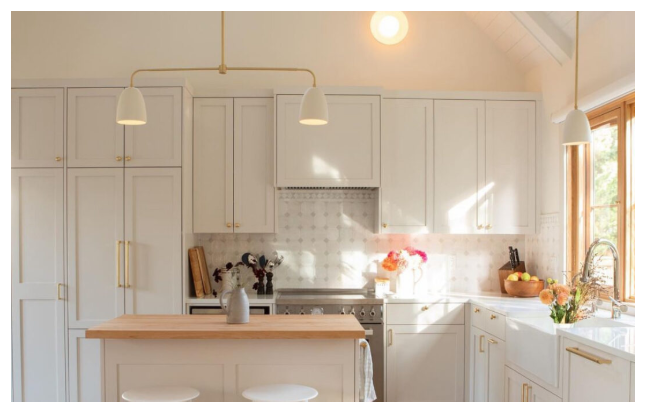
Extending upper cabinets all the way to the ceiling is one of the highest-impact changes you can make in a kitchen remodel. You gain real storage. The kitchen looks taller and more custom. And you eliminate that awkward dust-collecting ledge above the cabinets.
In smaller Orland Park kitchens, ceiling-height cabinets are especially valuable. They let you keep less-used items, holiday serving pieces, extra stock, large appliances up high and out of the daily workflow.
Practical tip: Use the top sections of ceiling-height cabinets for items you access a few times a year. Keep everyday items in the lower, easily reachable sections.
Open Shelving as an Accent
Open shelving works best as an accent not a replacement for closed upper cabinets. A few open shelves mixed into a wall of closed uppers adds visual interest and gives you a place to display a few curated items.
The problem with all-open shelving is real: everything has to look good all the time. In a working kitchen, that’s hard to maintain.
Practical tip: If you like the look of open shelving, replace just one or two upper cabinet runs with shelves — ideally away from the cooking zone where grease and steam settle on everything.
Glass-Front Upper Cabinets
Glass-front doors on a few upper cabinets add depth and break up a solid wall of cabinetry. They work especially well flanking a window or beside the refrigerator column.
Add interior LED lighting and glass-front cabinets become a genuine design feature not just storage.
Base Cabinet Ideas for Better Daily Function
Base cabinets take the hardest daily use of any cabinet in your kitchen. They deserve serious thought.
Drawers Beat Doors Almost Always
This is one of the most consistent findings from kitchen designers. More drawers in your base cabinets means better daily function. Full stop.
Standard base cabinets have one or two doors with a fixed or adjustable shelf inside. To get anything from the back, you have to crouch down, reach in, and dig. It’s frustrating every single time.
Drawer base cabinets let you see and access everything immediately. Pull the drawer everything is visible and reachable. No crouching, no digging.
Practical tip: Replace at least half of your door base cabinets with drawer bases during a remodel. You’ll notice the difference within the first week.
Deep Drawer Cabinets
Deep three-drawer base cabinets are a revelation for pot and pan storage. The top drawer handles utensils or dish towels. The middle and bottom drawers fit pots, lids, and large cookware flat, no stacking, no searching.
Pair deep drawers with drawer peg organizers and you can customize the layout for exactly what you own.
Pull-Out Shelves Inside Base Cabinets
If you’re keeping some door base cabinets, add pull-out shelves inside them. A pull-out shelf brings the entire cabinet contents to you, not reaching into dark corners. It’s a relatively affordable upgrade that dramatically improves usability.
In Orland Park kitchen remodels, pull-out shelves inside base cabinets are one of the most requested upgrades and one of the most appreciated after installation.
Sink Base Cabinets
The cabinet under your sink is usually wasted space. Pipes take up room, and most homeowners just shove cleaning products in there randomly.
Two solutions work well. Under-sink pull-out organizers that route around the plumbing. Or door-mounted organizers on the inside of the sink cabinet doors for spray bottles, sponges, and small cleaning items.
Neither is expensive. Both make a meaningful difference.
Corner Cabinet Solutions That Actually Solve the Problem
Corner cabinets are where kitchen layouts most often go wrong. In L-shaped and U-shaped kitchens which are extremely common in Orland Park, IL home corners are inevitable. How you handle them determines whether you gain storage or lose it.
This is also where investing in well-designed corner cabinets for kitchen layouts pays off most. A bad corner solution means wasted space you pay for but can never actually use. A good one recovers square footage and makes the whole kitchen more functional.
Lazy Susan Cabinets
The lazy Susan is the most familiar corner solution. A rotating circular tray inside the cabinet lets you spin items to the front rather than reaching into the back corner.
It works with some caveats. Round trays mean corners of the cabinet are still unused. And items near the edge can fall off the tray when it spins. For light items and pantry goods, lazy Susans are fine. For heavy pots and pans, there are better options.
Full-circle vs. half-moon: Full-circle lazy Susans need the cabinet door to be open to rotate. Half-moon (kidney-shaped) designs attach to the door and swing out as the door opens. The half-moon version is more intuitive and easier to use daily.
Blind Corner Pull-Out Systems
Blind corner cabinets are the standard cabinet you find at the end of a run that butts into a wall the corner section is “blind” because the door doesn’t go all the way to the corner.
A blind corner pull-out organizer installs inside this cabinet and slides out and to the side, bringing the hidden contents fully into view. It’s a genuinely clever solution that recovers storage most people assume is lost.
Practical tip: Blind corner pull-outs come in a wide range of quality. Invest in a heavy-duty version with full-extension glides. Cheap versions bind, sag, and stop working within a year or two.
Diagonal Corner Cabinets
A diagonal corner cabinet cuts the corner at a 45-degree angle. Instead of a sharp 90-degree corner, you get an angled cabinet face with a single large door.
The interior is roomy and accessible much more so than a standard corner cabinet. It also improves traffic flow in tight kitchens because it eliminates the sharp corner that people walk into.
This is a particularly smart choice in smaller Orland Park kitchens where both function and flow matter.
Magic Corner and LeMans Systems
Magic corner and LeMans systems are the premium end of corner storage. Swing-out shelving units mount inside the corner cabinet and pivot out when the door opens bringing everything into full view and full reach.
These systems are common in European kitchen design and are becoming increasingly popular in high-end Orland Park kitchen remodels. They’re not cheap except to spend $300–$600+ per corner unit but they make corner storage genuinely usable for the first time.
Practical tip: If your kitchen has two corners (common in U-shaped layouts), prioritize the corner closest to your cooking zone for the best pull-out or LeMans system. Use a simpler lazy Susan in the less-used corner to manage costs.
Pantry and Tall Cabinet Ideas
Tall cabinets are some of the hardest-working storage in any kitchen. Used well, they replace the need for a separate pantry room.
Floor-to-Ceiling Pantry Cabinets
A built-in floor-to-ceiling pantry cabinet can store an enormous amount. The key is how you organize the interior. Fixed shelves at random heights waste space. Pull-out pantry shelves where the entire shelf slides out toward you make even the deepest pantry accessible.
In Orland Park homes where a walk-in pantry isn’t an option, a tall pantry cabinet with interior pull-outs is the next best thing.
Practical tip: Group pantry contents by how often you use them. Daily items go at eye level. Weekly items go above and below. Rarely used items go at the very top and bottom.
Pull-Out Pantry Columns
Slim pull-out pantry units sometimes called pantry columns or pull-out towers fit in as little as 9 inches of width. They’re ideal for the space beside the refrigerator, beside the range, or at the end of a cabinet run.
Despite their slim profile, pull-out pantry columns hold a surprising amount. Canned goods, spices, oils, bottles a single 9-inch unit can store dozens of items that would otherwise crowd countertops.
Tall Appliance and Oven Cabinets
If you’re planning a wall oven or built-in microwave, design the tall cabinet around it from the start. Retrofitting an appliance into a standard cabinet almost never looks right.
A well-designed tall appliance cabinet integrates the oven and microwave at ergonomically comfortable heights, no bending down to a knee-level oven or stretching up to reach a microwave above the refrigerator.
Kitchen Island Cabinet Ideas
A kitchen island is one of the best storage opportunities in any open-concept kitchen. But only if the cabinet configuration inside it is planned well.
Single-Sided vs. Double-Sided Access
Single-sided island cabinets facing only the kitchen are the most common. They’re simple and functional.
Double-sided islands with cabinets or shelving accessible from both the kitchen and the seating side give you more storage options. The seating side can have open shelves for cookbooks, a wine rack, or simple pull-out storage for dining items.
Drawer-Heavy Island Bases
Islands are a great place to concentrate your deep drawer storage. Pot drawers, utensil drawers, and deep storage drawers on the kitchen-facing side of the island keep your most-used items close to the cooking zone.
This is especially valuable if your perimeter base cabinets are older and not yet updated. A new island with drawer bases can significantly improve daily function while a larger remodel waits.
Built-In Trash and Recycling
Hiding your trash and recycling inside the island base cabinet is a smart use of island storage. A pull-out two-bin or three-bin system keeps waste management out of sight without sacrificing floor space.
Practical tip: Place the trash pull-out on the side of the island closest to the sink and prep area. You’ll thank yourself every time you cook.
Smart Storage Solutions That Change How You Use Your Kitchen
The best cabinet layouts aren’t just about having enough storage they’re about having the right storage in the right places.
Pull-Out Spice Storage
A narrow pull-out spice rack beside the range is one of the most practical upgrades in any kitchen. Every spice is visible and reachable while you cook. No digging through a cabinet or a crowded drawer.
These pull-outs typically fit in as little as 3 inches of space between the range and an adjacent cabinet. Even if you don’t have a dedicated gap, a pull-out spice rack can often be incorporated into a narrow filler cabinet space.
Tray Dividers for Vertical Storage
Baking sheets, cutting boards, cooling racks, and serving trays are notoriously difficult to store. They fall over, slide around, and make every base cabinet they’re in feel chaotic.
Tray dividers vertical separators inside a base or tall cabinet section keep everything standing upright and individually accessible. Pull out the tray you need without disturbing everything else.
Practical tip: Put your tray divider section close to the oven. Keeping baking sheets and roasting pans near where you use them saves steps and keeps the kitchen organized naturally.
Built-In Waste and Recycling Systems
Under-sink pull-out trash systems and multi-bin recycling cabinets make waste management nearly invisible. In Orland Park homes with open-concept kitchens where the kitchen is visible from the living area keeping trash out of sight matters aesthetically as much as functionally.
Charging Drawers and Tech Integration
Modern kitchens use a lot of devices. Tablets, phones, earbuds, and small electronics tend to pile up on countertops.
A dedicated charging drawer with a built-in USB outlet and a way to route cables inside the drawer — keeps devices off the counter and charging out of sight. It’s a small detail that makes a big daily difference.
Cabinet Ideas for Small Kitchens
Small kitchens require smarter planning not smaller ambitions.
Go Vertical Aggressively
In a small kitchen, the floor plan is fixed. The ceiling is not. Ceiling-height upper cabinets in a small Orland Park kitchen can nearly double your storage without adding a single square foot of floor space.
Use pull-down shelf systems to make the highest shelves accessible. These systems mount inside upper cabinets and bring high shelves down to counter level with a gentle pull no step stool needed.
Narrow and Slim Cabinet Options
9-inch and 12-inch pull-out pantry cabinets fit in spaces most homeowners overlook. The gap between the refrigerator and the wall. The narrow space at the end of a cabinet run. Even a 6-inch filler cabinet can be converted into a pull-out spice or oil storage unit.
Practical tip: When planning a small kitchen remodel, look at every gap over 6 inches and ask whether it could be a slim pull-out. In small kitchens, these add up to meaningful storage.
Visual Tricks That Help Small Kitchens Feel Bigger
Light cabinet colors white, cream, light gray reflect light and make small kitchens feel more open. Consistent cabinet door styles reduce visual clutter. Glass-front cabinets on some uppers reduce the visual weight of a full wall of closed cabinetry.
These aren’t just aesthetic choices. In a small kitchen, how the space feels matters almost as much as how it functions.
Open-Concept Kitchen Cabinet Considerations
Open-concept kitchens in Orland Park, IL homes come with a specific design challenge: your cabinets are visible from the living and dining areas. They need to look finished from multiple angles.
Finished Cabinet Ends
Any cabinet end that’s visible from the living area needs a finished end panel. Raw cabinet sides which look fine when hidden against a wall look obviously unfinished when exposed to a sightline.
Finished end panels match the cabinet door style and color. Some homeowners add decorative corbels or furniture feet to exposed base cabinet ends, giving the kitchen a built-in, furniture-quality look.
Peninsula Cabinet Design
In kitchens with a peninsula, the back of the peninsula cabinets faces the living or dining area. This side is an opportunity not dead space.
Open-back bookshelf sections for cookbooks and plants. A wine rack integrated into the lower peninsula cabinet. Simple open cubbies for baskets. The back of the peninsula can be as intentional and useful as the kitchen-facing side.
Balancing Open and Closed Storage
Open-concept kitchens benefit from a balance of closed cabinets and open shelving. Closed cabinets handle functional everyday storage dishes, pots, pantry goods. A few open shelves handle display and easy-grab items.
Too much open shelving in an open-concept kitchen means clutter is always visible from the living area. Closed cabinets keep the kitchen looking calm and organized even when the kitchen itself isn’t perfectly tidy.
Hardware and Door Details That Improve Function
The right hardware makes cabinets noticeably more pleasant to use every day.
Soft-Close Hinges and Drawer Glides
Soft-close hardware is not a luxury. It’s a standard expectation in any quality kitchen remodel in Orland Park today. Doors and drawers that close quietly and gently extend the life of the cabinet and eliminate the daily slam that wears on everyone in the house.
If you’re keeping existing cabinets but upgrading hardware, soft-close hinge retrofits are available for most door styles and are a very affordable improvement.
Full-Extension Drawer Glides
Standard drawer glides only pull out 75 percent of the way. Full-extension glides pull all the way out. The difference sounds small. In practice, being able to see and reach everything in the back of a drawer without fishing around changes how useful that drawer actually is.
Always spec full-extension drawer glides in any new cabinet installation.
Handle-Less and Push-to-Open Options
Handle-less cabinets are popular in modern and minimalist Orland Park kitchens. They use push-to-open hardware (touch-latch or tip-on mechanisms) so no pulls or knobs interrupt the cabinet face.
They look clean and intentional. The practical limitation is that they require a deliberate push to open which becomes second nature quickly but can feel unfamiliar at first.
Practical tip: Push-to-open works well on upper cabinets and drawer bases. On heavy-duty base cabinets near the cooking zone, a simple sturdy pull is often more reliable for daily hard use.
Lift-Up and Bi-Fold Upper Cabinet Doors
Standard upper cabinet doors swing out and require clearance in front of them. In tight kitchens or areas near the refrigerator or range, that swing clearance creates a conflict.
Lift-up doors fold up and stay out of the way. Bi-fold doors fold back inside the cabinet frame. Both eliminate door swing conflicts and make upper cabinets easier to use in constrained spaces.
Finishing Details That Pull the Whole Layout Together
Crown Molding
Crown molding at the top of upper cabinets is the detail that separates a kitchen that looks assembled from one that looks designed. It connects the cabinets to the ceiling and gives the whole run a built-in, intentional quality.
In Orland Park homes with taller ceilings, crown molding also helps visually close the gap between cabinet tops and the ceiling even if you don’t go all the way to ceiling height.
Under-Cabinet Lighting
Under-cabinet LED lighting transforms how a kitchen functions after dark. Task lighting directly on the countertop makes meal prep easier and safer. It also adds warmth to the kitchen atmosphere in the evenings.
Hardwired under-cabinet lighting looks cleaner than plug-in versions. If you’re doing a full remodel, it’s worth running the wiring while the walls are open.
Practical tip: Use warm white LEDs (2700K–3000K) for under-cabinet lighting. They match most kitchen lighting and feel much more inviting than cool white strips.
Toe Kick Drawers
The toe kick the recessed base at the bottom of your cabinets is almost always dead space. Toe kick drawers fit into that space and add hidden storage for flat items: baking sheets, placemats, serving trays, or step stools.
They’re not a primary storage solution. But in a small Orland Park kitchen where every square inch counts, toe kick drawers are a clever use of space most kitchens completely ignore.
Choosing the Right Cabinet Partner in Orland Park, IL
The cabinet ideas in this guide only work if the products and installation behind them are quality. In Orland Park’s kitchen remodel market, that means working with people who know what they’re doing.
A good cabinet supplier helps you think through layout, storage priorities, and material choices for your specific home and budget. They’re not just selling boxes, they’re helping you design a kitchen that works for the next 15 to 20 years.
Experienced kitchen cabinet designers in Orland Park can walk you through semi-custom and custom options in person, help you visualize the layout, and recommend storage solutions you might not have considered.
When you’re ready to move forward, working with Custom Kitchen Cabinets specialists near you means getting real guidance not just a catalog and a quote.
Budgeting for a Smart Cabinet Layout
Smart cabinet planning isn’t just about picking great ideas. It’s about knowing where your money makes the biggest difference.
Where to Invest
Drawer bases over door bases every time. Pull-out shelves inside base cabinets. Quality corner solutions. Soft-close and full-extension hardware. Ceiling-height uppers if your ceiling allows it. These are the upgrades that change how the kitchen feels to use every day.
Where You Can Save
Stock or semi-custom cabinets in secondary areas, a laundry room or a butler’s pantry don’t need the same quality as your primary kitchen cabinets. Simple fixed shelving in a walk-in pantry is often more storage-efficient than complex pull-out systems.
Stock vs. Semi-Custom vs. Custom
Stock cabinets ($60–$200 per linear foot installed) offer limited sizes and configurations. Fine for straightforward layouts with no unusual dimensions.
Semi-custom cabinets ($150–$400 per linear foot installed) offer real size flexibility and more storage options. This is where most Orland Park kitchen remodels land and it’s the right call for most homes.
Custom cabinets ($500–$1,200+ per linear foot installed) are made to your exact specifications. Worth it for complex layouts, unusual ceiling heights, or high-end remodels where every detail matters.
Practical tip: In most Orland Park kitchen remodels, spend your budget on quality hardware and smart interior storage systems inside semi-custom boxes. You get most of the custom results at a fraction of the custom price.
Working with Professionals in Orland Park, IL
When to Hire a Kitchen Designer
Complex layouts L-shaped, U-shaped, or open-concept kitchens with multiple sightlines benefit enormously from professional space planning. A kitchen designer helps you avoid costly mistakes before a single cabinet is ordered.
They’ll look at your space differently than you do. They see opportunities and conflicts you might miss. For kitchens over 150 square feet or layouts with more than one corner, professional design guidance is money well spent.
Questions to Ask a Cabinet Supplier
Before committing to any cabinet supplier in Orland Park, ask these questions: Is the cabinet box plywood or particleboard? What drawer glide system do you use? What’s the warranty on the cabinet finish? How long is the lead time for semi-custom orders?
The answers tell you quickly whether you’re dealing with a quality supplier or one cutting corners where you can’t see it.
Timeline Expectations
Semi-custom cabinets typically ship 4–8 weeks after order. Custom cabinets can take 10–16 weeks. Installation itself takes 1–3 days for a standard kitchen, longer for complex layouts with tall cabinets and specialty storage systems.
Plan your countertop and flooring work around the cabinet installation, not the other way around. Cabinets go in first. Everything else follows.
Conclusion
A smart cabinet layout is the difference between a kitchen that looks good and one that actually works well. In Orland Park, IL homes whether you’re working with a compact older kitchen or a wide-open new build the ideas in this guide apply directly to your space.
Start with your layout type and work triangle. Solve your corners properly. Maximize your vertical space. Prioritize drawers over doors in your base cabinets. Add smart interior storage where it matters most.
Do those things well, and you end up with a kitchen that feels genuinely custom regardless of what you spend.