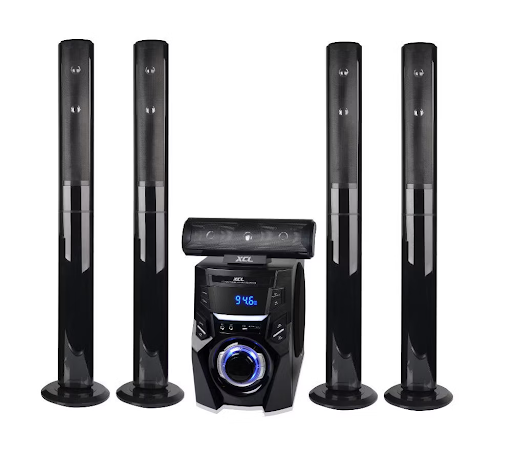
A large room can sound gentle without towers of gear. The trick lies in how sound travels, not in how big the boxes look. A high ceiling, a long corridor, or a busy hall can all feel clear when energy lands where people actually stand. Small commercial audio speakers can do this work, provided the design treats them as a connected team rather than as scattered parts.
The idea starts with coverage. People hear what reaches them directly before they hear the room. A compact loudspeaker mounted at the right height and angle sends a tidy wave to a nearby zone. Another unit takes the next patch, and another follows after that. Overlap stays small, so echoes do not smear words. Each listener receives a steady level without needing the front to shout. The space feels calm because energy is shared across many points instead of thrown from one end to the other.
Timing then keeps the picture stable. A voice that leaves a stage and arrives at the back a moment late can feel loose. Delay settings align the near and far zones so syllables meet the ear together. Claps do not blur. Music keeps its rhythm. People relax because their brains do not need to solve puzzles just to follow a sentence.
Low frequencies deserve care of their own. Bass builds in corners and fades in aisles. A small sub, placed with modest gain and crossed to the satellites, adds weight without boom. High pass filters on the satellites raise headroom so the small drivers stay clean. The result hides the join between the lows and mids. Songs keep body, announcements keep shape, and neither fights the other.
Prediction helps before any rig goes up. A simple model shows where sound will land and where it might pile up. Designers adjust height and tilt on the screen, then match those choices on site. After the first test, a few degrees of aim or a small change in gain can fix a stubborn hotspot. It is not magic. It is measured work done with patience.
The playlist still matters, even in a technical plan. Busy arrangements at high levels tire guests in long rooms. Sparse tracks with steady rhythm carry farther and leave room for speech. Smoother transitions keep attention without sudden jumps. Staff know the mood they want at midday and at evening, so the system follows a clear script that the room can support.
Sensors and light monitoring make maintenance easier. A meter watches average level by zone and warns when the crowd rises. The processor trims a touch and restores comfort. At closing, a short test track checks for weak channels. If one unit fails, the matrix diverts a nearby box to cover, and the gap stays hidden until a swap arrives. Service continues and guests notice nothing unusual.
There are limits. Glass, concrete, and tall atriums ask for extra care. Weather in outdoor spaces changes sound hour by hour. Still, the method scales. Add zones when a room grows. Remove them when a layout shrinks. Keep the same logic: put sound near people, keep levels modest, and let timing do the heavy lift.
In the end, the proof sits in the room. Conversations flow, music breathes, and announcements cut through without sting. If asked how a wide space sounds so poised with such modest hardware, the answer stays simple. The venue uses small units as a coordinated system, and because commercial audio speakers placed with intention share the load, the whole place feels balanced rather than loud.