Corner cabinets have frustrated homeowners for decades. You open the door, reach into the darkness, and half your kitchen supplies disappear into the void. It’s one of those design problems that feels minor until you’re living with it every single day.
The truth is, corner cabinets hold a surprising amount of potential storage. The problem isn’t the space, it’s how the space is organized and accessed. With the right hardware, the right system, and a clear plan, corner cabinets can become some of the most functional storage in your entire kitchen.
Homeowners in Orland Park, IL are tackling this head-on during kitchen remodels. The southwest Chicago suburbs have seen a steady uptick in kitchen upgrades over the past few years. And corner cabinet solutions long overlooked in favor of countertop and appliance upgrades are finally getting the attention they deserve.
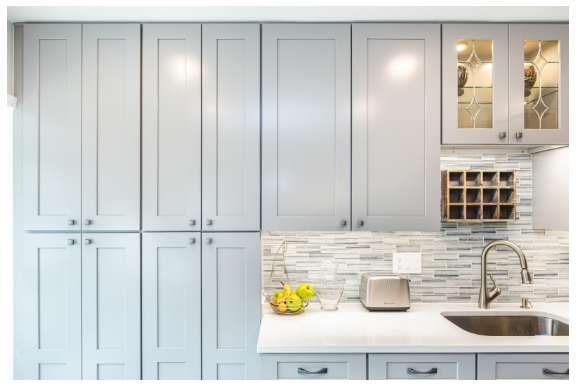
When people think about kitchen style, they often gravitate toward shaker style cabinetry. It’s clean, timeless, and works in almost any home. But even the most beautifully designed shaker-style cabinetry falls short if the corner sections are poorly planned. A gorgeous cabinet run with a dead, inaccessible corner is still a frustrating kitchen to work in every day.
Why Corner Cabinets Are Such a Challenge
The problem starts with geometry. When two cabinet runs meet at a right angle, the interior space behind the corner is deep, wide, and awkward to reach. Standard shelves don’t help items pushed to the back become invisible and inaccessible.
Most kitchens have at least one or two of these corners. In an L-shaped or U-shaped kitchen, the corner count goes up. And in each of those spots, storage potential is being lost to poor accessibility.
The frustration compounds over time. Items migrate to the back. You forget what’s there. You buy duplicates. You eventually stop using the corner cabinet altogether which means paying for square footage in your kitchen that does nothing for you.
Modern storage hardware has changed this conversation completely. The solutions available today pull-outs, swing-outs, rotating carousels, and diagonal drawers are genuinely transformative. They turn dead corners into active, organized storage zones that compete with the most accessible cabinets in the room.
Understanding Your Corner Cabinet Type First
Before you choose a solution, you need to know what kind of corner cabinet you’re working with. Not all corners are the same and the wrong hardware for your configuration is a waste of money.
Blind corner cabinets are the most common type in Orland Park homes. One cabinet face is visible. The other is hidden behind the adjacent cabinet run. Access is limited to one side, which creates the deep, unreachable zone most homeowners complain about.
L-shaped corner cabinets have two accessible faces that meet at 90 degrees. Both doors open, but the interior still has awkward angles and dead zones near the back.
Diagonal corner cabinets have an angled face that cuts across the corner at 45 degrees. Access is better than a blind corner, but the interior still needs smart organization.
Corner pantry cabinets are tall, floor-to-ceiling units built into the corner. They offer massive storage potential when outfitted with the right internal systems.
Open corner shelving removes the doors entirely. Everything is visible and accessible, which solves the accessibility problem immediately but requires a commitment to keeping things organized and visually tidy.
Take five minutes to identify which configuration you have before researching hardware. It will save you from buying a solution designed for a different problem.
The Best Storage Solutions for Blind Corner Cabinets
Blind corners are the toughest case. Here’s what actually works.
Magic Corner systems are one of the most effective solutions available. Two shelves are mounted on a hinged mechanism. When you open the door, the inner shelf slides out and swings forward, bringing everything to you. Nothing stays hidden. These systems require professional measurement and installation but the result is a corner that functions like a standard accessible cabinet.
Le Mans pull-out systems use a kidney-shaped shelf on a pivot arm. Both shelves move together as you pull the door open. The ergonomics are intuitive and the access is excellent. Le Mans systems are popular in modern kitchen remodels across Orland Park because they work well with clean-line cabinet designs.
Swing-out shelving works similarly. Shelves mounted on a swing-out frame come toward you when the door opens. Two-tier and three-tier configurations maximize vertical space inside the blind corner. These are a strong alternative to lazy Susans in deep corner applications.
Pull-out drawer systems built specifically for blind corners bring items out on a sliding platform. They work especially well when the corner holds items of similar height baking sheets, cutting boards, or heavy appliances.
All of these systems work best when installed during a full cabinet renovation or remodel. Retrofitting them into existing cabinets is possible but requires precise measurement of the cabinet opening, depth, and door clearance.
Lazy Susan Systems Still a Solid Choice
The lazy Susan has been solving corner cabinet problems for a long time. And despite the newer systems available today, it remains one of the most cost-effective and reliable solutions on the market.
The classic full-circle lazy Susan works in L-shaped corners where both doors are accessible. Everything rotates toward you. No reaching. No forgotten items buried at the back.
For blind corners, a pie-cut or half-moon lazy Susan is the better choice. The shelves are shaped to swing out through the single accessible door opening. They don’t require both doors to open which is the whole point.
Modern lazy Susans have improved significantly. Soft-close mechanisms prevent shelves from spinning past the door opening. Ball-bearing bases rotate smoothly under heavy loads. Multi-tier versions stack two or three rotating levels to maximize vertical space.
Lazy Susans are generally DIY-friendly for homeowners who are comfortable with basic cabinet work. They’re also the most budget-accessible corner solution full-circle systems start around $40 and quality options top out around $150.
Kitchen Corner Base Cabinet Solutions in Detail
Base corner cabinets carry the heaviest loads and see the most daily use. Getting the storage solution right here makes a genuine difference in how the kitchen functions.
The kitchen corner base cabinet is one of the most valuable and most wasted areas in a typical kitchen layout. It holds more volume than most other cabinet positions. But that volume is useless if you can’t access it comfortably. For the kitchen c
corner base cabinet, the choice between a lazy Susan, a Magic Corner pull-out, or a swing-out system depends on three things: the size of the cabinet opening, the door configuration, and your budget. Larger openings give more hardware options. Smaller openings narrow the field toward pie-cut lazy Susans or compact pull-out systems.
Weight matters more in base corners than anywhere else. Heavy items cast iron cookware, stand mixer attachments, bulk pantry staples end up here. Whatever hardware you install needs to handle that load consistently over years of daily use. Choose hardware rated for at least 50 pounds per shelf for base corner applications.
Installation in an existing kitchen corner base cabinet requires careful measurement before ordering anything. The interior dimensions, door hinge placement, and cabinet face frame depth all affect what will and won’t fit. Get these numbers before you order returns on installed hardware are rarely possible.
Upper Corner Cabinet Solutions
Upper corner cabinets present a different set of challenges. The space is higher, the items stored are usually lighter, and visibility matters more than sheer load capacity.
Rotating shelf towers work well in upper corners. A vertical carousel mounted inside the corner cabinet rotates to bring items forward. These are particularly effective for spices, small jars, and pantry items that benefit from visibility.
Angled glass-front corner cabinets are a design choice that also solves the access problem. When the corner cabinet has a diagonal face with glass-panel doors, everything inside is visible and the angled opening provides better reach than a straight-face configuration.
Open corner shelving in upper positions is a strong option for Orland Park homeowners who keep their kitchens tidy. Floating shelves in the upper corner create an open, airy feel. They’re easy to access, easy to style, and particularly effective in open-plan kitchens where the corner is visible from the living area.
Diagonal corner cabinets with swing-out shelf inserts are the most functional upper corner option when you need to maximize storage while maintaining a closed cabinet appearance.
For upper corners that see infrequent use seasonal baking equipment, serving pieces, or backup pantry stock a simple adjustable shelf without specialty hardware may be all you need. Reserve premium hardware for the corners you use every day.
Corner Pantry Cabinet Solutions
Corner pantry cabinets are a different beast entirely. They’re taller, deeper, and hold significantly more than standard corner base or upper cabinets. The storage potential is enormous but so is the organizational challenge.
Bifold door configurations are the starting point. A bifold door on a corner pantry opens the full face of the cabinet in a way that a standard hinged door can’t. Full access means nothing gets trapped at the back or side.
Pull-out pantry inserts inside a corner pantry transform the interior. Full-extension pull-out shelves on both sides of the pantry interior bring every item within reach. These work best when installed during initial cabinet construction retrofitting into an existing corner pantry requires careful measurement of door clearance and shelf depth.
Tall rotating carousel systems are purpose-built for corner pantries. Multiple tiers of rotating shelves stack from floor to ceiling, making full use of the cabinet’s vertical height. They’re the most space-efficient option for a corner pantry that needs to store a large volume of pantry goods.
For Orland Park homeowners doing a full kitchen renovation, specifying a corner pantry cabinet from the start with the right door configuration and internal hardware planned in advance delivers far better results than retrofitting solutions into a poorly configured existing cabinet.
Maximizing Space Inside Corner Cabinets
Even with great hardware, the way you organize inside a corner cabinet matters. A few practical tips make a real difference.
Use vertical space deliberately. Most corner cabinets have more height than homeowners use. Stackable bins, tiered risers, and multi-level lazy Susans all help fill vertical space that would otherwise go unused.
Group items by frequency of use. Daily items belong at the front of any corner system. Seasonal or rarely used items go in the harder-to-reach zones. This one change alone improves daily workflow significantly.
Use clear containers. Decanting dry goods, snacks, and pantry staples into clear stackable containers makes items visible at a glance. In a rotating system, being able to see what’s on every shelf without reading labels saves time every single day.
Label everything. In cabinets where items rotate or swing, labels on shelves help maintain organization over time especially when multiple family members use the kitchen.
Don’t over-fill. Corner cabinet hardware has weight limits. Overloading a lazy Susan or pull-out system damages the mechanism and shortens its lifespan. Leave a reasonable margin below the maximum rated capacity.
Design and Aesthetic Considerations
Storage function and kitchen aesthetics don’t have to compete with each other. The best corner cabinet solutions do both well.
In Orland Park kitchens, the most common design challenge is matching corner cabinet hardware and door style to the rest of the kitchen. If the primary cabinet run uses a clean, flat-panel door profile, the corner cabinet should follow suit. If the kitchen uses a more traditional raised-panel style, the corner configuration should match.
Corner cabinet door choices affect the visual flow of the entire kitchen. Diagonal face corner cabinets break the run at a 45-degree angle, visually distinctive but slightly less storage-efficient than a straight-face blind corner. Straight-face configurations blend seamlessly into the cabinet run but require better internal hardware to compensate for the more limited access.
Glass-front upper corner cabinets are a practical design choice that adds visual depth and lightness. In open-plan Orland Park homes where the kitchen is visible from the living area, a glass-front corner upper cabinet creates a sense of continuity and space that solid-door configurations don’t.
Two-tone corner cabinets using a different finish on the corner unit than the surrounding run are a growing design trend in 2026. A corner cabinet in a contrasting deep color against white surrounding cabinets creates a deliberate focal point rather than a visual problem to solve.
Cost Breakdown for Corner Cabinet Storage Upgrades
Understanding the investment before you commit helps you plan realistically.
| Solution Type | Cost Range | DIY Friendly | Best Configuration |
| Basic lazy Susan (full-circle) | $40–$150 | Yes | L-shaped corners |
| Pie-cut / half-moon lazy Susan | $50–$180 | Yes | Blind corners |
| Swing-out shelving system | $150–$350 | Moderate | Blind corners |
| Magic Corner pull-out | $200–$500 | No — professional install | Blind corners |
| Le Mans pull-out system | $250–$600 | No — professional install | Blind corners |
| Diagonal corner drawer system | $400–$900 | No — built-in | Modern base corners |
| Corner pantry carousel | $300–$800 | Moderate | Corner pantry cabinets |
| Open corner floating shelves | $30–$200 | Yes | Upper corners |
Professional installation adds $100 to $300 per cabinet position in the Orland Park market depending on complexity. For Magic Corner and Le Mans systems, professional installation is not optional; the precision required during fitting determines whether the system works correctly long-term.
Budget for the hardware and installation together when planning a corner cabinet upgrade. The hardware alone is only half the investment.
Installation Tips and Practical Advice
Getting the installation right is as important as choosing the right solution. A few practical points before you start.
Measure everything twice. The interior cabinet dimensions, door hinge placement, face frame depth, and door swing clearance all affect which hardware will fit. Measures before ordering anything hardware return policies are often limited once packaging is opened.
Check door clearance. Pull-out and swing-out systems require the door to open a minimum of 90 degrees sometimes more. In tight kitchens or corner configurations with adjacent appliances, verify that the door can open fully before specifying hardware.
Match hardware weight ratings to intended use. If the corner cabinet will store cast iron cookware or a stand mixer, choose hardware rated well above those weights. Under-spec hardware wears out quickly.
Consider soft-close on all hardware. Soft-close mechanisms on lazy Susans, pull-outs, and swing-out systems prevent slamming, extend hardware life, and add a quality feel to the finished cabinet. The cost premium is modest.
When retrofitting existing cabinets, take photos of the interior dimensions and bring them to a cabinet hardware specialist. Many hardware suppliers in the Chicago metro area offer free measurement consultations for homeowners tackling corner cabinet retrofits.
Common Mistakes to Avoid
These come up repeatedly in DIY corner cabinet projects.
Buying hardware before measuring. This is the most common mistake and the most preventable one. Every corner cabinet is slightly different. Generic sizing assumptions lead to hardware that doesn’t fit or barely fits and performs poorly.
Choosing the wrong system for the cabinet type. A full-circle lazy Susan in a blind corner cabinet won’t work the shelf can’t exit through the single door opening. Match the solution to the configuration, not just the budget.
Over-filling corner hardware. Lazy Susans and pull-outs have weight limits. Exceeding them causes the mechanism to sag, stick, or fail entirely. Distribute heavier items across multiple storage positions rather than loading everything into the corner.
Ignoring the corner during a full remodel. This is surprisingly common. Homeowners focus the remodel budget on visible elements, countertops, cabinet faces, appliances and specify the minimum for corner storage. Then they live with it and wish they’d invested more. Corner storage hardware is worth budgeting properly from the start.
Skipping professional installation for complex systems. Magic Corner and Le Mans systems are precision hardware. Improper installation means the shelves don’t clear the door, the pivot arm binds, or the mechanism doesn’t align correctly. These systems are not DIY-friendly budget for professional fitting.
Trends in Corner Cabinet Design for 2026
Corner cabinet design is evolving quickly. Here’s what’s gaining traction right now.
Integrated corner drawer systems are replacing lazy Susans in high-end new builds. Angled drawer faces built directly into the corner base cabinet create seamless, intuitive storage without specialty inserts. These are spec’d at the design phase not retrofitted.
Pull-out tower systems are growing in popularity in open-plan Orland Park kitchens. A full-height pull-out tower in the corner position brings every level of storage to the front simultaneously. The visual impact of a clean, organized column of storage is significant.
Sensor lighting inside corner cabinets is becoming standard in premium kitchen builds. LED strips that activate when the door opens illuminate the entire interior solving the visibility problem that makes corner cabinets frustrating in the first place.
Handleless corner cabinet doors align with the broader minimalist kitchen trend. Touch-latch mechanisms and push-to-open hardware eliminate visible handles for a completely seamless cabinet face.
Corner cabinets as intentional design features rather than awkward necessities. More Orland Park kitchen designers are treating the corner as a focal point using contrasting finishes, glass fronts, or open shelving specifically in the corner position to create visual interest rather than trying to blend it invisibly into the run.
Final Thoughts
Corner cabinets don’t have to be the most frustrating part of your kitchen. With the right solution matched to your specific cabinet configuration and a realistic budget for quality hardware they can become some of the most functional storage in the room.
For Orland Park, IL homeowners planning a kitchen remodel or a targeted storage upgrade, the investment in better corner cabinet hardware pays off every single day. You’ll stop losing items to the back of the cabinet. You’ll stop buying duplicates of things you already own. And you’ll use your kitchen more efficiently because the storage actually works with you.
Start by identifying your corner cabinet type. Measure carefully. Research the right solution for that specific configuration. And if the project involves complex hardware like pull-out systems or custom corner drawers, work with a local kitchen cabinet professional who can spec and install it correctly the first time.