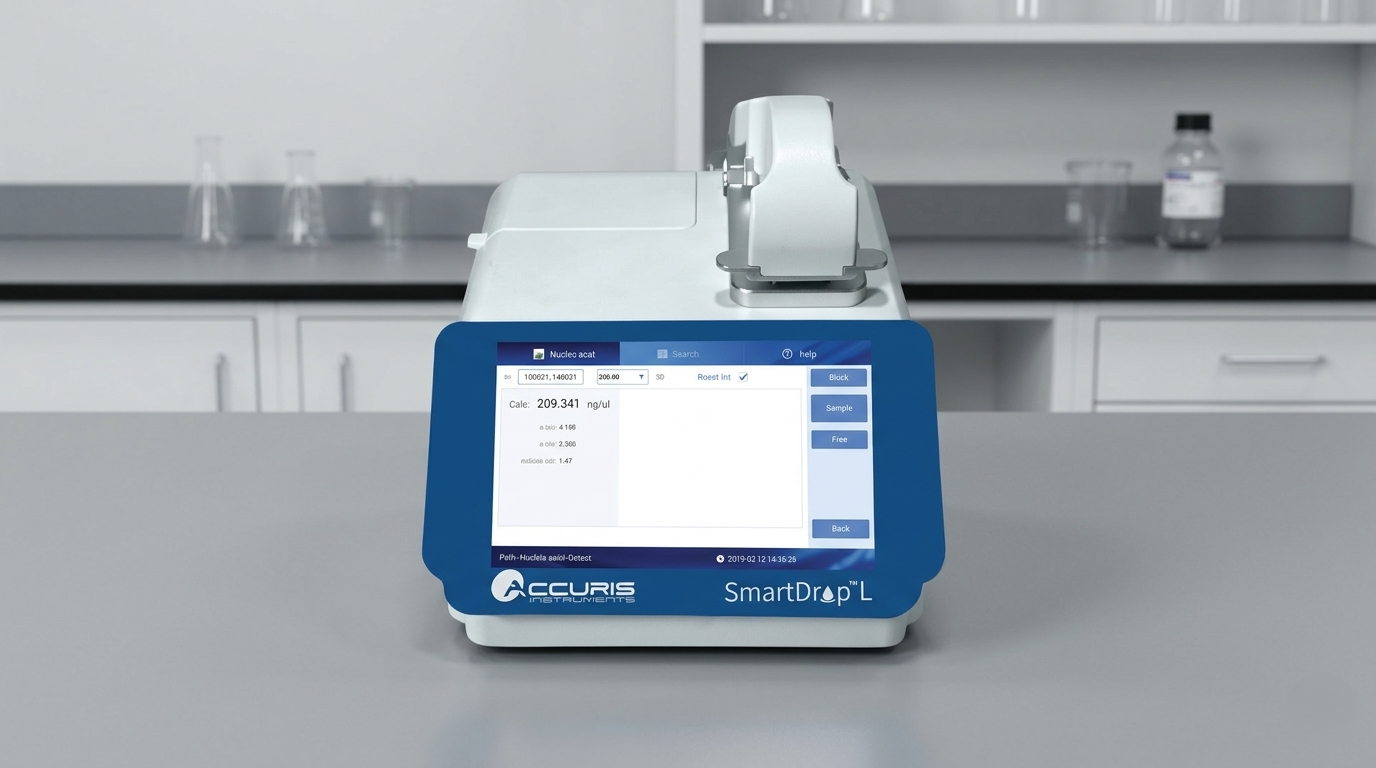
In many labs, spectrophotometry is treated as a straightforward task: measure absorbance, calculate concentration, and move on. While this approach works for routine assays, it often overlooks the deeper story that is hidden in spectral data.
A modern laboratory spectrophotometer not only just confirms how much light a sample must absorb, but it also provides insight into composition, purity, molecular interactions, and even instrument performance.
By understanding these signals, you can significantly improve the reliability and depth of your analysis.
What’s the Science Behind Spectral Data Interpretation?
Absorbance Vs Transmittance Vs Reflectance
Absorbance is the most commonly used parameter, especially for concentration measurements. However, transmittance, which means the amount of light passing through a sample, and reflectance(how much light bounces off a surface), are equally valuable in specific contexts.
For instance, reflection is widely used in material and surface studies, whereas transmittance can help you validate optical clarity. Looking at all three will help you get a more complete picture.
Understanding Spectral Fingerprints
Every compound interacts with light in a different way, producing a unique spectral “fingerprint.” These patterns are essential for identifying substances and verifying sample integrity.
Instead of focusing on a single wavelength, examining the full spectrum lets you confirm whether your sample behaves as expected or contains unknown elements or components.
Beer-Lambert Law and Its Practical Limitations
The Beer-Lambert law emphasizes most quantitative spectrophotometric analysis, linking absorbance to concentration. However, real-life samples often differentiate themselves from ideal conditions.
High concentrations, light scattering, and stray light can distort results. Recognizing these limitations will help you ensure that calculated values remain meaningful, not misleading.
What Your Instrument Data Reveals About the Composition of Samples
Detecting Impurities and Contaminants
Unexpected peaks or irregular baselines are often the most obvious symbols of contamination. Even the smallest impurities can alter spectral patterns, which makes it essential to compare results with reference spectra.
This step is specifically important in quality control and research environments where precision is extremely important.
Quantitative Vs Qualitative Insights
Spectrophotometry is commonly associated with quantification. However, it also supports qualitative analysis. While absorbance values show concentration, spectral shapes and peak positions can help you in revealing chemical identity.
When you combine both approaches, you’ll be able to get more robust and accurate conclusions.
Multi-Component Analysis in Complex Samples
In mixtures, overlapping spectra can complicate interpretation. Advanced software tools and calibration models can help you deconvolute these signals, which enables accurate analysis of multi-component systems. This capability is specifically useful in pharmaceuticals, environment testing, and biochemical research.
Hidden Signals: Noise, Baseline Drift, and Instrument Limitations
Identifying Noise and Signal Instability
Noise appears as small fluctuations in spectral data and it can originate from electronic interference and or environmental factors. While minor abuse is inevitable, excessive instability will reduce confidence in results. Recognizing and minimizing noise will improve data quality.
Baseline Shifts and What They Mean
A drifting baseline is often overlooked but it can indicate instrument issues or inconsistencies in samples. It may result from changes in temperatures, aging components, or improper blanking. Correcting baseline shifts is necessary for accurate interpretation.
Stray Light and Optical Error
Stray light occurs when unwanted light reaches the detector, distorting absorbance readings, specifically at higher concentrations. Regular instrument checks and proper maintenance can help you identify and reduce these issues at a significant rate.
Extracting Actionable Insights from Spectral Patterns
Peak Shape, Width, and Intensity Analysis
Peaks are more than just signs of presence. Their shape and width can reveal molecular interactions, solvent effects, and structural changes. For instance, broader peaks may suggest complex mixtures or environmental influences on the sample.
Time-Based Spectral Changes(Kinetics)
Spectrophotometers can track how spectra evolve over time, which makes them valuable for studying reaction kinetics. When you notice these changes, it will help you determine reaction rates, intermediate formations, and completion points.
Wavelength Selection for Precision
Choosing the correct wavelength is essential. Selecting a wavelength where absorbance is most sensitive to concentration changes improves accuracy. At the same time, avoiding interference regions will help you prevent misleading results.
Advanced Features That Expand Analytical Capabilities
Scanning Vs Fixed Wavelength Modes
Fixed wavelength measurements are fast and efficient for routine assays. However, scanning across a range of wavelengths offers a comprehensive view of samples. This wider perspective is important, as it helps you identify and troubleshoot problems.
Integration with Software and Data Analysis
Modern instruments often include advanced software for data processing, visualization, and reporting. Automated analysis cuts down the chances of human error and enables more consistent interpretation, specifically in high-throughput environments.
Calibration Curves and Method Validation
Reliable results depend on proper calibration. Developing accurate calibration curves and validating methods will help you ensure consistency across experiments. Regular verification will help you strengthen confidence in both qualitative and quantitative findings.
Conclusion
Spectrophotometry isn’t just about measuring absorbance. Each spectrum has layers of information about sample composition, quality, and behaviour.
By looking beyond single values and embracing full-spectrum analysis, you can discover insights that can improve both accuracy and understanding. The real value of spectrophotometry isn’t just the measurement itself, but in how effectively the data is interpreted and applied.