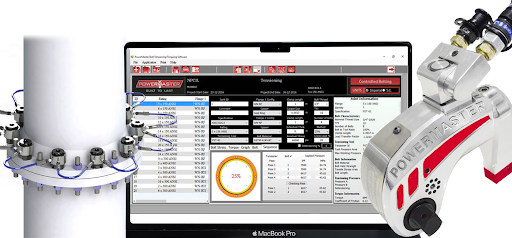
A very important step during the assembly of machinery, pipelines or industrial equipment is to tighten bolts correctly. torque value for bolt tightening with proper torque value keeps the bolts tight enough, neither over-tightened nor under-tightened. Appropriate torque prevents equipment from breaking down, leaking or requiring costly maintenance. From manufacturing to construction and maintenance, knowing the correct torques can enhance safety and equipment performance.
Why Is the Correct Torque Value Important?
Using the proper torque value for bolt tightening offers several benefits:
- Prevents bolts from loosening due to vibration.
- Decreases the possibility of breaking or failing the bolts.
- Helps to prevent thread damage.
- Distributes the load uniformly between joints.
- Improves the safety and reliability of machinery.
Bad torque will lead to the damage of equipment, delays in production and even costly maintenance.
Factors That Affect Bolt Tightening Torque
Several factors influence the required tightening torque:
-
Bolt Size:
Generally, the larger the bolt, the greater the torque needed.
-
Bolt Material:
The torque needed varies based on the material type (stainless steel, carbon steel or alloy steel) Pushing Threads are loosely shaped for harrowing results.
-
Thread Condition:
The tighter the threads are, the more accurate the tightening result. Soiled and damaged threads may result in incorrect torque readings.
-
Joint Design:
The value of the recommended torque also depends on the material and thickness of the connected components.
Understanding Nut Bolt Tightening Torque
The correct nut bolt tightening torque is dependent on engineering requirements, grade, diameter and application. Most manufacturers have torque charts for their products that suggest torque values for various sizes of bolsters and materials.
Compliance with these specifications assures consistent assembly quality and minimizes the potential for joint failure. Never estimate torque by feel, especially in critical industrial applications.
Best Practices for Accurate Tightening
- Use a calibrated torque wrench.
- Secure bolts in the following order
- Gradually and evenly apply torque.
- Look at the manufacturer’s torque chart before beginning.
- Check bolts and threads before installing if necessary.
- Recheck torque if required during maintenance.
Most Common Mistakes to Avoid
There are lots of reasons why problems may appear when tightening, such as:
- Over-tightening bolts
- Under-tightening fasteners
- Using damaged tools
- Ignoring lubrication effects
- Not following recommended nut bolt tightening torque values
Conclusion
The safety, dependability and future service of the equipment is greatly dependent upon firmly bolting down properly. Using the proper amount of torque and using suitable tools and methods helps to minimize failures while improving efficiency.
Powermaster’s high-quality torque tools are engineered for accuracy, durability and consistent performance, providing reliable industrial bolting solutions. These high-tech products enable maintenance technicians to get a tight fit in a variety of industrial applications, providing a safer, more efficient operation.